The Slow Jar: A Beginner's Sauerkraut for Late Autumn
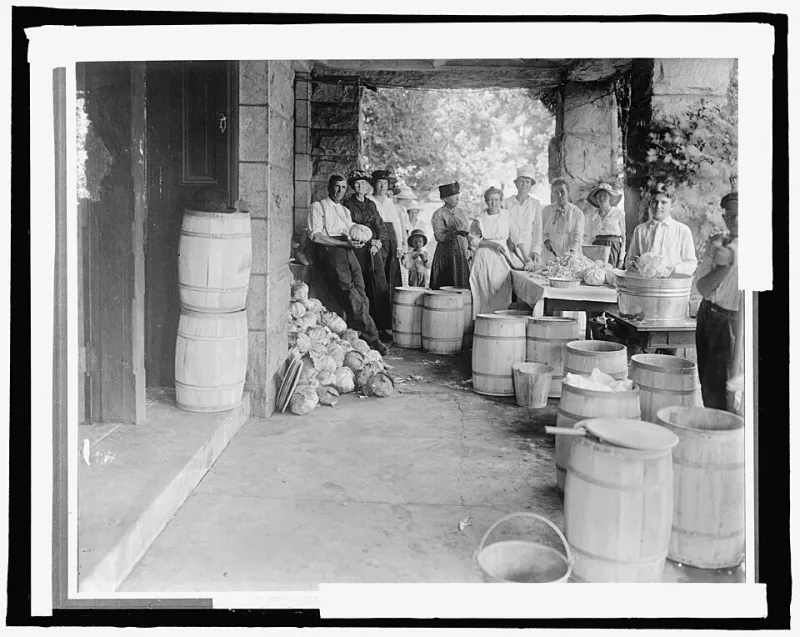
Photo: National Photo Company Collection, Public domain, via Wikimedia Commons
There is a point in late autumn when the cabbage at the market stops being a supporting act. The heads get tighter, the leaves sweeter, and the price drops enough that you can buy one without a plan. That is the moment to make sauerkraut. Not because it is fashionable, and not because you need another hobby, but because cabbage, salt and time will do most of the work while you get on with everything else.
At the cookery school we spend a lot of the autumn talking about heat: roasting, braising, reducing. Fermentation is the other half of the seasonal story. It is cooking with cold and patience instead of flame. If you can massage salt into shredded cabbage and keep a jar reasonably cool, you can make kraut. The rest is just paying attention.
Start with the cabbage, not the kit
You do not need a ceramic crock, an airlock or a special weight. A clean glass jar — a one-litre Kilner or a large jam jar with a decent lid — is enough for a first batch. You also need non-iodised salt, a bowl, a knife or mandoline, and clean hands. That is the whole kit list.
Use firm white or red cabbage. Red makes a startlingly pretty jar and tastes a little sharper; white is more classic and forgiving. One medium head, about a kilo once trimmed, will fill a one-litre jar with a bit of room to spare. Save a couple of outer leaves — you will want them later.
Shred the cabbage finely but not obsessively. Somewhere between a pound coin and a matchstick is fine. If you have a mandoline, use it; if not, a sharp knife and a steady rhythm will do. Put the shreds in a large bowl and sprinkle over the salt.
Salt: the only number that matters
The reliable starting point is 2% salt by weight. Weigh your prepared cabbage, then weigh out 2% of that weight in salt. For a kilo of cabbage, that is 20g. A digital scale takes the guesswork out of it, and guessing is the most common reason a first batch goes wrong.
Now massage. Squeeze, scrunch and turn the cabbage for five to ten minutes. At first it will feel dry and pointless. Then the cell walls begin to give up their water, the leaves soften, and a brine starts to pool in the bottom of the bowl. That is the signal to stop. If after ten minutes there is barely any liquid, add a tiny splash of filtered water — a tablespoon at a time — rather than more salt.
Pack the cabbage into the jar a handful at a time, pressing down firmly as you go. You want the brine to rise above the cabbage. Leave about 3cm of headspace at the top, because the jar will bubble and push up in the first week. Fold one of the reserved outer leaves, roll it up, and tuck it under the shoulder of the jar to help keep the shreds submerged. A small clean weight — a boiled stone, a smaller jar, a zip-lock bag filled with brine — will do the same job. Screw the lid on loosely.
The cool-kitchen question
Sauerkraut does not need a warm cupboard. In fact, most Essex kitchens in November are close to ideal: somewhere between 16°C and 20°C. A cooler spot will ferment more slowly and taste milder; a warmer spot will move faster and turn sharper. Both are fine. What you are trying to avoid is a draughty windowsill that swings from cold to sun-warm and back again.
Put the jar on a plate — brine may escape — and keep it somewhere out of direct light. Press the cabbage down under the brine once a day with clean fingers or the back of a spoon. Burp the lid daily for the first week to release gas. After three or four days you should see small bubbles and a slightly sour smell. That is normal. A thin white film on the surface is usually harmless kahm yeast; skim it off. Fuzz that is green, black or pink is not normal. If you see that, bin the batch and start again with cleaner kit.
Start tasting after a week. Sauerkraut is ready when it tastes good to you: tangy, crunchy, not yet soft. In a cool kitchen that might take two weeks; in a warmer one, seven to ten days. When you like it, screw the lid on properly and move the jar to the fridge. It will keep for months, though it will continue to soften slowly.
Beyond the sausage plate
A jar of kraut is not just a condiment for pork. Treat it like a sharp, crunchy vegetable. Pile it into a cheese toastie. Fold it through a warm potato salad with mustard and dill. Add a spoonful to a bowl of lentil soup at the end, just to wake it up. Use the brine in salad dressings or a bloody mary. Fry drained kraut in butter until it caramelises at the edges, then serve it with eggs on a dark morning.
It also makes a useful gift, decanted into a smaller jar with a label and a date. That is the sort of thing people actually use in January, when the fridge is full of good intentions and half a cabbage.
A quiet kind of cooking
Fermentation sits slightly apart from the braising and baking we teach in the school kitchen, but it belongs to the same idea: learn the technique, then trust your own senses. A recipe can tell you 2% salt and two weeks, but only you can taste the jar and decide it is ready. That is the quiet confidence we are always going on about.
So buy the cabbage while it is good. Find a clean jar. Weigh the salt, use your hands, and let the cold do its work. By the time the Christmas plates come out, you will have a jar of something sharp and alive in the fridge — and one more skill that does not need a gadget.