Why Your Sprouts Deserve Better Than a Boil
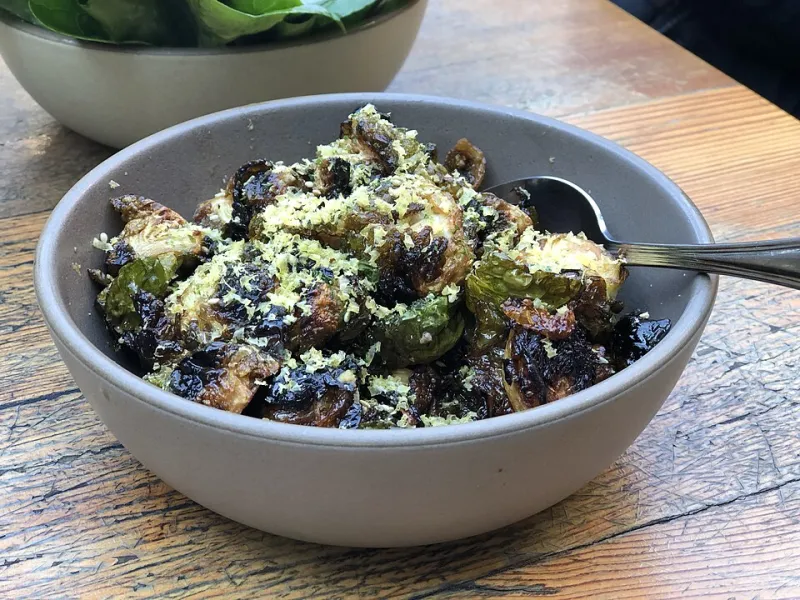
Photo: Missvain, CC BY 4.0, via Wikimedia Commons
Every December, someone at the table says the same thing: 'I don't like sprouts.' Fair enough. Most of us have been served a bowl of them that tasted like damp cabbage and looked like it had been boiled for a bet. But that is not a sprout problem. It is a cooking problem, and it is one we tackle head-on in our winter classes at Essex Cookery School.
This is not about hiding sprouts under bacon or drowning them in cream. It is about giving them a fair hearing. Get the buying, storing and heat right, and even the committed sceptic tends to go quiet, then reach for a second spoon.
Start with a better sprout
A good sprout is firm, tight and deep green, with no yellowing and no loose, floppy outer leaves. Smaller and medium-sized sprouts tend to be sweeter and more tender than the whoppers. If you are buying from an Essex farmers' market or farm shop in December 2026, ask when they were picked. Freshness matters more than size. Avoid bags that smell sulphurous before you have even cooked them.
At home, store sprouts loose in the fridge crisper drawer or in a paper bag. Do not seal them in a damp plastic bag, where they will sweat and turn musty. Use them within three or four days. Wash them just before cooking, not the day before. Trim the base sparingly and peel away only the leaves that are genuinely damaged; the tight outer leaves are there to protect the sprout and they roast beautifully.
The grey problem is mostly an overcooking problem
Sprouts contain natural sulphur compounds. Cook them briefly and they taste sweet and nutty. Cook them too long and those compounds make themselves known, the texture collapses and the colour turns from bright green to a sad olive grey. Boiling is not the enemy. Boiling for twelve minutes without thinking is.
If you boil, use plenty of salted water, keep the sprouts whole unless they are huge, and aim for six to eight minutes. They should be tender at the stem but still have some bite. Drain them well and serve straight away. Do not leave them sitting in a covered pan to steam themselves into submission.
Blanching is different. It is a two-minute dip in salted boiling water, followed immediately by a plunge into iced water to stop the cooking. Drain and dry them thoroughly. Blanching is a useful make-ahead step for a busy December table: you can blanch in the morning, keep the sprouts covered in the fridge, then finish them with high heat later. But wet sprouts will steam rather than roast, so dry them properly.
High heat, cut side down
Roasting is where sprouts win most converts. Heat the oven to 200C fan or 220C conventional. Halve the sprouts through the stem, toss them with a little oil and salt, and lay them cut side down on a preheated tray. Give them space. If the tray is crowded, they will steam and sulk.
Roast for around 18 to 25 minutes, depending on size, turning once. You want dark, caramelised cut faces and a few crisp outer leaves. Very large sprouts can be blanched first, but dry them well before they go anywhere near the oven.
A class-style tasting that changes minds
In our winter sprout session, we set up a simple blind tasting. Three plates, same sprouts, same salt, different cooking. Plate one is boiled until just tender. Plate two is roasted from raw, cut side down. Plate three is blanched, dried and then roasted hard. We add chestnuts to the roasted plates in the last five minutes and finish everything with a few drops of cider vinegar off the heat.
Use vacuum-packed cooked chestnuts if you like; break them into rough pieces and let them warm through rather than disintegrate. The vinegar should be a bright finishing note, not a puddle. A teaspoon or two for a whole tray is plenty. Taste without knowing which is which, then talk about texture, sweetness and bitterness. Nearly every sceptic picks a roasted plate. The point is not to prove them wrong. It is to show them what sprouts can do when they are not overcooked.
The December table plan
For entertaining, the easiest route is to blanch and dry the sprouts earlier in the day, then roast them at the last minute while the bird rests. If oven space is tight, finish blanched sprouts in a hot frying pan with oil and a little butter, cut side down, until they are burnished. Season at the end, add chestnuts and a splash of cider vinegar, and serve immediately.
That is the whole conversion: buy fresh, store properly, cook briefly or roast hard, and finish with acid and salt. No ceremony, no hiding. Just a better sprout, and one fewer sceptic at the table.