A Pinch of Place: How Maldon Salt Earns Its Keep in an Essex Kitchen
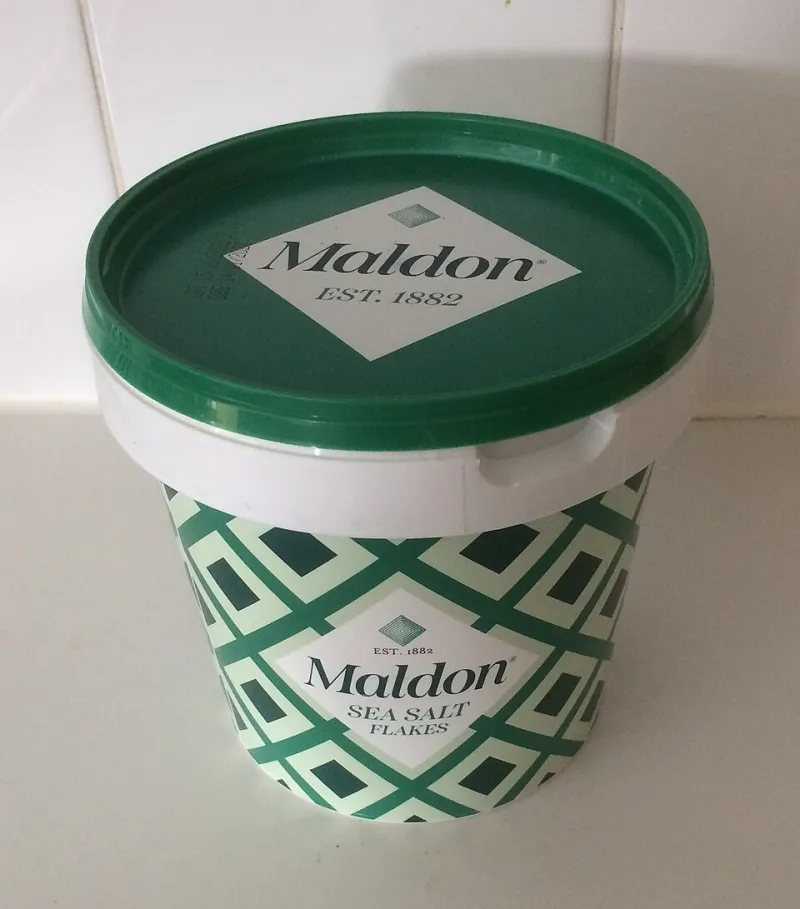
Photo: Freckletony, CC0, via Wikimedia Commons
Salt is one of those ingredients that hides in plain sight. You use it every day, often without thinking, and then one day a flake lands on a tomato and you realise there is salt, and then there is salt with something to say. Maldon salt is the Essex version of that moment: bright, brittle, faintly mineral, and shaped like tiny pyramids that crack between your fingers.
It has become a British kitchen staple for good reason, but it is worth knowing what you are buying and how to get the best from it.
A short history from the Blackwater
Maldon has been making salt since the late 19th century. The Maldon Crystal Salt Company has been producing sea salt in the town since 1882, drawing water from the Blackwater estuary and boiling it in shallow pans. The crystals are raked by hand, which is why they form those distinctive pyramid-shaped flakes rather than the small, dense cubes of table salt.
That method matters. Slow evaporation gives large, hollow flakes with a lot of surface area and a light, crunchy texture. They do not taste of the sea in a gimmicky way; they taste clean and saline, with a short, sharp finish. The town of Maldon itself is a small Essex port with a long maritime history, and the salt works has become part of that identity. You do not need to romanticise it to enjoy it, but it is nice to know that a store cupboard staple has a place attached to it.
Why the flake changes the way you season
The shape is not just decoration. A pinch of flaky salt contains less salt by weight than a pinch of fine table salt, because the flakes are hollow and airy. That makes it harder to over-season by accident and easier to add texture. When you scatter flakes over a dish, they sit on the surface for a moment before dissolving, so you get little bursts of salt rather than an even, invisible hit.
This is why Maldon works so well as a finishing salt. It gives a dish a savoury edge without turning it into a briny experience. It is also why you should be careful when swapping it for table salt in baking. If a recipe gives salt by weight, use weight. If it gives a teaspoon, remember that a teaspoon of flakes is much lighter than a teaspoon of fine salt. When in doubt, weigh it.
Buying and storing
Buy Maldon salt in a sealed box or bag and check that the flakes are loose rather than clumped into a brick. A little clumping can happen in damp kitchens, but it should break easily between your fingers. Avoid the temptation to keep it in the fridge; condensation will do it no favours. A cool, dry cupboard and a small jar with a lid are ideal.
If you decant it, keep the original box for the use-by date or write the date on the jar. Use dry fingers or a small spoon. A few grains of rice in the jar can help with humidity, though it is not essential. The flakes are fragile, so do not grind them to powder unless a recipe specifically asks for fine salt. The point is the flake.
Practical uses, from roasting tin to salad bowl
Maldon is often described as a finishing salt, and that is a good place to start. Scatter it over roast potatoes as they come out of the oven, or over a whole roast chicken after resting. Use it on buttered radishes, sliced cucumber, or a boiled egg with good bread. A few flakes on a baked potato with cold butter is a small, excellent thing.
It also earns its keep in cooking. Use it to season the water for pasta or potatoes, though you may need more by volume than you would with fine salt. Add it to a roasting tin of carrots, parsnips and red onion before they go into the oven, and finish with another pinch when they come out. The first pinch seasons; the second gives texture.
For a simple tomato salad, the difference is easy to taste. Slice ripe tomatoes, salt them lightly with flakes, and leave them for ten minutes. Add a little olive oil, a few drops of vinegar if you like, and more flakes just before serving. The salt draws out the juices and makes the tomatoes taste more like themselves. It is not a recipe so much as a reminder that good seasoning is often the whole trick.
Maldon salt is not the only good salt in Britain, and it is not the only way to season a meal. But it is a useful one to understand. Keep a box in the cupboard, a small jar by the hob, and a few flakes between your fingers. That is usually enough.