Put the Recipe Down: Learning to Cook by Feel in an Essex Kitchen

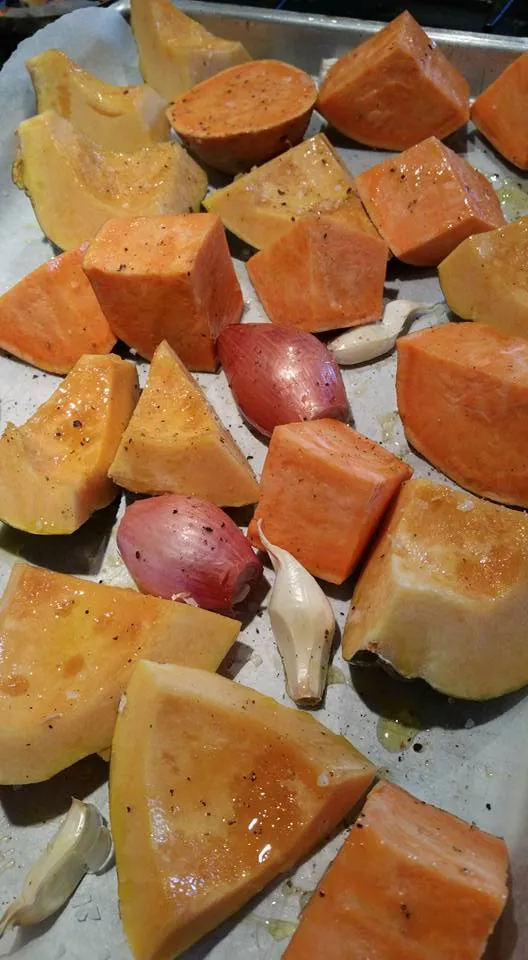
Photo: home cook stirring root vegetable soup in a rustic kitchen, no recipe book, warm autumn light, via www.qcnews.com
There is a moment in class when the recipe sheets go face down. Someone always laughs nervously. Someone else asks whether they are allowed to look. Then the pans go on and, within ten minutes, the room sounds different: knives moving more slowly, questions turning from 'how many grams?' to 'does this smell right?'
That shift is the whole point. Recipes are brilliant training wheels. They get you moving, they stop you falling over, and they teach you roughly what a dish should look like. But at some stage you have to take them off, or you spend your whole cooking life waiting for someone else to tell you when to turn the heat down.
Why we take the sheet away
In an autumn 2026 class at Essex Cookery School, we set out a tray of roots — carrots, parsnips, leeks, a lump of celeriac, a few knobbly things from the back of the veg box — plus pearl barley, stock, bay and thyme. No fixed recipe. No neat list of 350g this and 1.2 litres that. Just a method to follow and a set of cues to watch for.
The first reaction is usually panic disguised as practicality. How much barley? How much stock? How long? We answer with questions: how much soup do you want? How thick do you like it? Is your barley old or new? How sweet are the parsnips? Those are not tricks. They are the actual decisions a cook makes, and a recipe can only guess at them in advance.
What the class actually teaches
Cooking by feel is not a mystical talent. It is a set of observations. You learn to hear the difference between a gentle sizzle and a furious one. You notice when onions go from raw and sharp to soft and sweet. You press a piece of carrot with the back of a spoon and understand whether it is nearly there or still firmly in the middle. You taste a soup before salting it, not after.
The class also teaches a quieter lesson: season matters more than precision. A carrot in November is not the same as a carrot in June. A parsnip that has seen a cold snap will be sweeter. Hardy greens might need longer cooking than the tender leaves you bought in summer. If you follow a recipe to the gram but ignore what is actually in your kitchen, you are not really cooking — you are assembling.
The root-vegetable and pearl barley soup method map
This is the framework we use in class. It is not a fixed recipe, and that is deliberate. Use it as a map, not a satnav.
1. Start with the alliums
Begin with onion, leek or both. Sweat them gently in oil or butter with a pinch of salt until soft and sweet, not browned. This is your base. If you rush this stage, the soup will taste thin no matter how good the stock is. You are looking for translucency and a smell that makes you want to stay in the kitchen.
2. Brown the roots properly
Add your chopped roots — carrots, parsnips, celeriac, swede, whatever you have — and turn the heat up a little. Let them colour. Not burnt, but properly golden at the edges. This is where the soup gets depth. If you just boil roots in stock, you get a perfectly nice vegetable broth. If you brown them first, you get something that tastes like it has been cared for.
3. Add the barley and liquid in stages
Stir in pearl barley — a good handful per person, roughly 50g to 75g each — and add stock a ladle at a time. Let it come to a gentle simmer. Add more liquid as it is absorbed. You are not trying to hit an exact volume; you are trying to reach a texture. Do you want a brothy soup or a thick, stew-like bowl? Keep the pan topped up accordingly.
4. Cook until the barley is tender and the roots collapse
This is the sensory bit. Pearl barley should be tender with a little chew, not chalky and not mushy. The roots should be soft enough to crush against the side of the pan with a spoon. If the barley is done but the roots are still firm, keep going. If the roots are collapsing but the barley is stubborn, add a splash more liquid and lower the heat.
5. Taste, then fix
Only now do you make the final decisions. Does it need salt? Almost certainly a little more than you think. A squeeze of lemon or a teaspoon of vinegar? Often yes — roots can taste flat without a lift. More thyme? Black pepper? A swirl of cream or a drizzle of good oil? Taste, adjust, taste again. This is the part a recipe cannot do for you.
6. Write your own note
Before you wash up, jot down what you did. Not a full recipe — just the useful bits. 'Brown roots harder next time.' 'Needed more stock.' 'Lemon at the end was good.' Over a few weeks, those notes become your own method, and your own method is worth more than any borrowed recipe.
How to try it at home
Pick a quiet evening, not a dinner-party night. Choose a pot, a tray of roots and a grain. Put the recipe book away, but keep a notebook nearby. Give yourself permission to make a bowl of soup that is fine rather than perfect. The first attempt might be a bit thick. The second might need more salt. By the third, you will be making decisions without thinking about it.
That is not a small thing. It is the difference between needing a recipe to cook and knowing how to cook. The sheet can go face down. You will be fine.