Gravy in Reserve: The Christmas Sauce You Make Before the Chaos
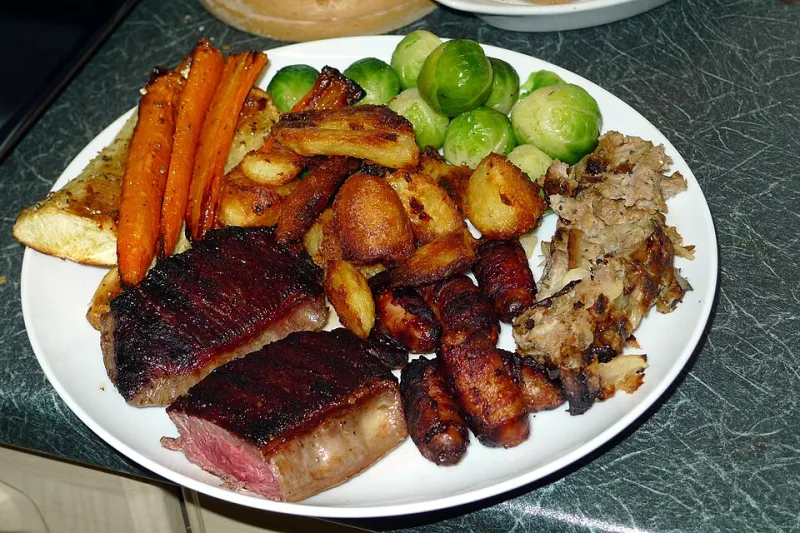
Photo: Ewan Munro from London, UK, CC BY-SA 2.0, via Wikimedia Commons
Every December, gravy gets treated like an afterthought. The bird comes out, the potatoes are drained, someone shouts for a jug, and a pan of hot fat is suddenly expected to become something silky in ninety seconds. It rarely does. At Essex Cookery School we teach gravy as a skill in its own right, and the most useful version is the one you make before the day itself. Not a panic pour, but a sauce in reserve: built properly this week, frozen flat, and brought back to life when the kitchen is at its busiest.
Start With Flavour You Can Actually Control
On Christmas Day you are at the mercy of the bird. The juices might be plentiful, or they might be thin and pale. Making gravy in advance takes the guesswork out. Begin with a base you can taste and adjust without an audience.
Ask your butcher for a couple of turkey wings, or a chicken wing or two if that is easier. Add a neck if they have one. These are inexpensive and full of gelatine, which gives gravy a lovely body. Brown them hard in a roasting tin with onion, carrot, celery, a bay leaf and a few peppercorns. Let the vegetables take on colour, not just soften. A spoonful of tomato purée, cooked until it darkens, adds depth without making the gravy taste of tomatoes.
Deglaze the tin with a splash of cider, white wine or even water, scraping up the sticky brown patches. Add good stock — chicken or turkey, fresh if you can get it, or a decent concentrated stock from a jar. Simmer gently for forty-five minutes or so, then strain. That is your base. It should taste savory and slightly under-seasoned. You are going to concentrate it later, so resist the urge to salt it heavily now.
The Tin Teaches You More Than Any Recipe
If you want to understand gravy, watch what happens in a roasting tin. The browned edges, the caramelised onion, the dark stickiness at the corners — that is where the flavour lives. When you make gravy ahead, you are essentially borrowing that lesson and applying it early. The tin you use now does not need to be the same one the turkey will sit in. It just needs to be hot enough to brown properly and wide enough that the ingredients are not piled up and steaming.
This is also the point to think about your stock. A weak stock makes a thin, sad gravy no amount of flour can rescue. If you are buying stock, buy the best you can afford and taste it first. If it is bland, reduce it with the roasted wings before you strain. That concentration is what gives make-ahead gravy its quiet confidence.
Thickening Without Lumps or Drama
There are three sensible routes. A light roux — equal butter and plain flour, cooked for a minute or two — gives a classic, glossy finish. A cornflour slurry, mixed with cold water, is the quickest fix if you are thickening at the end. Or you can simply reduce the strained base until it coats the back of a spoon. Reduction gives the cleanest flavour, but it takes time and can make the gravy salty if your stock was already seasoned.
For make-ahead gravy, I like a small amount of roux. Make it in a separate pan, then whisk in your hot stock a ladleful at a time. If you add all the liquid at once, you will get lumps. If you do get lumps, do not panic. Push the gravy through a sieve and carry on. No one at the table will ever know.
Aim for a gravy that is slightly thinner than you want it to be when hot. It will thicken as it cools, and again when reheated. You can always add stock later; you cannot easily take thickness away.
Salt, Judged Cold and With Care
Seasoning gravy is a moving target. Taste it warm, not hot, and remember that it will taste saltier once it has reduced. Use a light hand. Maldon salt, with its flaky crunch, is best added at the very end, just before serving, so you get the flavour without over-salting the whole batch.
If the gravy does become too salty, dilute it with unsalted stock or water. A teaspoon of redcurrant jelly or a squeeze of lemon can balance the edges, but it will not remove salt. Better to start under-seasoned and correct at the table. This is the Essex kitchen way: practical, unhurried, and never pretending that a mistake cannot be fixed.
Portion, Label and Freeze Flat
Let the gravy cool quickly, then chill it. Skim off any fat that sets on top. Pour into freezer bags, press them flat, and label with the date and contents. Flat bags defrost quickly and stack neatly. If you have a small amount left, freeze it in an ice cube tray and bag the cubes for single servings. It will keep happily for three months.
On the Day: Reheat, Taste, Pour
Defrost the gravy overnight in the fridge. Reheat it gently in a pan, whisking as it comes back to a simmer. If it looks too thick, loosen it with a splash of stock or water. If it needs a lift, add a little of the turkey roasting juices — just a spoonful or two, as they can be salty. Taste again. Add fresh thyme or a grind of pepper if you like. Pour from a jug, not a ladle, and let someone else carry the potatoes.
A Week-Before Checklist
Ask your butcher for wings or a neck. Make or buy good stock. Roast, simmer and strain your base. Thicken lightly. Cool, portion and freeze. Write the date on the bag. Then forget about it until Christmas Eve.
Gravy made in advance is not a shortcut. It is a sensible bit of kitchen planning that buys you calm on the day. And calm, when the doorbell goes and the sprouts need draining, is worth more than any last-minute whisking.