Six Pots, One Draughty Sill: The Winter Herb Shelf That Actually Works
There's a particular kind of optimism in buying a supermarket basil in November. It looks lush, it costs about the same as a decent sandwich, and by Tuesday the leaves have gone black and the whole pot smells faintly of a swimming pool changing room. We've all done it. I've done it twice this month.
But a windowsill herb shelf doesn't have to be a slow-motion disappointment. With a bit of editing — fewer pots, better positions, and a slightly ruthless approach to watering — a draughty Essex sill can keep you in parsley, thyme and mint well into spring. It also saves the small fortune that quietly disappears into those plastic packets at the till, half of which end up in the bin with the elastic band still on.
First, be honest about the sill
Most of us don't have a conservatory. We have a window in a Victorian terrace in Wivenhoe, or a 1930s semi in Chelmsford with original metal-framed windows that whistle in a northerly. That's fine. Herbs are tougher than the labels suggest, but they do have opinions.
Aim for the brightest windowsill you have — ideally south or west-facing. Four to five hours of decent light is enough for thyme, rosemary, sage and bay. Parsley will cope with slightly less. Basil will sulk unless it gets proper sun, which is why it's the one herb I'd treat as a short-term guest rather than a resident.
Two things to avoid: sitting pots directly above a radiator (the dry heat frazzles leaves and encourages the dreaded fungus gnat), and leaving them pressed against a single-glazed pane on a frosty night. A centimetre of gap makes a difference.
Rotate the pots a quarter-turn once a week. It takes four seconds and stops everything leaning permanently towards the light like commuters on the 07:42 into Liverpool Street.
The herbs that don't need babysitting
If you only keep four pots, make them these. They're the ones that earn their rent.
Thyme. Practically indestructible. It wants gritty, well-drained compost and a light hand with the watering can. Snip the tips rather than pulling whole stems. It'll see you through roast chicken, traybakes of squash and leeks, and a very good butter for mushrooms on toast.
Rosemary. Woody, upright, and happy to be ignored. It goes leggy in low light, so give it the sunniest spot. A sprig under a lamb shoulder or in a tin of roasting potatoes with a good pinch of Maldon salt is the whole point.
Sage. Soft, grey-green and much hardier than it looks. It'll flop a bit in a warm kitchen, so water sparingly. Fry whole leaves in butter until crisp and spoon over gnocchi or a squash purée — that's a two-minute trick that tastes like a restaurant.
Bay. A small bay in a pot is a slow-growing, deeply unfashionable hero. One leaf in a rice pudding, two in the Sunday ragù, three in a pan of stock. It also copes with neglect, which is more than can be said for most things on a kitchen sill.
The rescue-mission herbs
Parsley is a biennial, which is a polite way of saying it's going to give up eventually. Buy a fresh pot in autumn, use it hard, and don't expect miracles. Flat-leaf is more useful than curly in the kitchen. Chop the stems as well as the leaves — they carry a surprising amount of flavour and bulk out a green sauce no end.
Mint needs its own pot, always. Put it in with anything else and it will annex the neighbours within a fortnight. Keep it damp and pick regularly; a neglected mint goes woody and bitter by January.
Basil, meanwhile, is a rescue mission. Take it out of the supermarket sleeve as soon as you get home — that plastic is what turns it to mush. Sit it in a saucer of water for ten minutes, then let it drain. Pinch out the flower buds the moment they appear. Use leaves from the top down, and never keep it in the fridge.
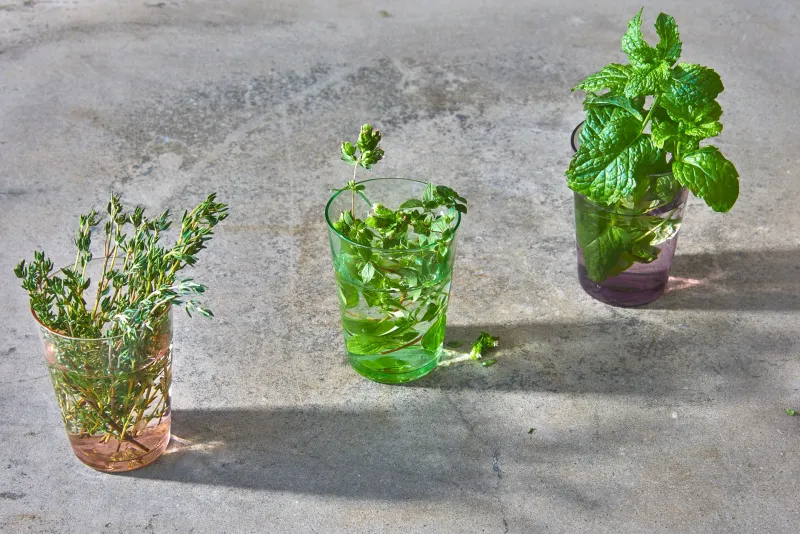
If you want to be clever about it, snip a few stems and stand them in a glass of water on the sill. Basil roots in about a week, and you've got next month's pot for free.
Watering: the bit that actually kills them
Almost every windowsill herb dies of kindness. People water a bit every day, the compost stays soggy, the roots rot, and the plant collapses while looking mysteriously thirsty.
Water properly, then leave it alone. Thyme, rosemary, sage and bay want the top of the compost to dry out between drinks — perhaps once a week in winter, more often if the radiator is on. Parsley and mint prefer to stay gently damp. Basil wants consistent moisture but hates standing in water.
Water in the morning, tip away whatever collects in the saucer, and empty any decorative outer pot that's hiding a puddle. That's it. That's the whole system.
A sill, not a greenhouse
Six pots is plenty. Eight is showing off. The temptation is to turn a small kitchen shelf into a horticultural project, complete with grow lights and a spreadsheet, and that's the point at which it stops being useful and starts being another thing to feel guilty about.
Buy a decent-sized pot of each hardy herb from a garden centre or a market stall — Chelmsford market on a Friday is as good a place as any — rather than a tiny supermarket punnet. A larger plant in a slightly bigger pot will overwinter far more reliably than a small, stressed one. Repot into compost with a handful of grit mixed through, and give it a saucer.
And if a pot dies? Bin it and buy another. This isn't the Chelsea Flower Show. It's dinner.
What it's actually for
A herb shelf justifies itself in the cooking, not the gardening. A handful of parsley turned into a sharp green sauce with capers, mustard and olive oil will lift a plain piece of Essex-roasted fish on a grey Tuesday. Thyme stripped into a tray of carrots and parsnips makes a Sunday roast feel less like a chore. Mint chopped into yoghurt alongside a lamb chop is the work of thirty seconds and completely changes the plate.
That's the real case for keeping herbs indoors over winter: not self-sufficiency, not aesthetics, but the fact that fresh green things make cold-weather cooking taste less brown. A few pots on a draughty sill will do more for your November suppers than another kitchen gadget ever will.
If you'd rather learn the knife skills and sauce basics in person than muddle through at home, our seasonal classes run through the winter months — but honestly, start with six pots and a windowsill. It's cheaper, and you can do it in your dressing gown.